More about HKUST


Risk Management and Business Intelligence
Speakers
.jpg) |
Addressing the Financial and Monetary Stability Risks of StablecoinsIn recent years, interest in stablecoins has grown across digital assets and traditional financial sectors, raising concerns among global regulators and international bodies. From a financial stability perspective, stablecoins have the potential to allow risks to spill over from the digital asset space to the traditional financial system, as issuers generally hold fiat currency-based assets as reserves. From a monetary stability standpoint, widespread adoption of stablecoins may disrupt the transmission of monetary policy and raise questions about monetary sovereignty, especially in emerging market economies. To address these risks, international bodies have been promoting the implementation of global regulatory framework and standards for crypto-asset markets and activities, including global stablecoin arrangements. Keynote Speaker Mr. Daryl HO Mr. Ho was appointed as Executive Director (Monetary Management) of Hong Kong Monetary Authority (HKMA) in November 2023. His key responsibilities include stablecoin regulation, financial stability surveillance, the Linked Exchange Rate System, currency issuance, and the regulation of stored value facilities and retail payment systems. He previously served as Executive Director (Banking Policy), and he was responsible for the HKMA’s work on implementing international regulatory standards and banking policy making, including policy on green and sustainable banking. An economist by training, Mr. Ho joined the Research Department of HKMA in 2001. Before taking up his present role, he had worked in various functional areas including monetary operations, market development, and financial stability surveillance. Before joining HKMA, Mr. Ho served in the investment banking industry as an economist between 1993 and 2000. |
.jpg) |
Tokenization of Trade Assets and DocumentsTokenisation could modernise trade finance by digitising the exchange of information, rights and ownership as goods move across multiple parties and borders. Four shifts may follow: trade payments and finance in digital currencies; tokenisation of trade finance assets into transferable, immutable digital assets; smart-contract automation along the lifecycle of trade finance; and on-chain distribution and fractionalisation of trade assets. Together, these enable atomic delivery-versus-payment settlement and could help narrow the SME trade finance gap. Past distributed ledger technology efforts show success depends on scaled adoption, shared data standards, legal recognition of electronic records/digital assets, and on-chain settlement. Ms. Raluca POPA Raluca Popa is the Head of Global Trade Solutions for HSBC Hong Kong. She leads a team of 150 colleagues covering structured trade, import and export finance, supply chain financing, and factoring solutions. Prior to her current role, she has extensive corporate banking and credit risk experience in Shanghai, UK, US, and Mexico covering M&As, LBOs, Renewables, and Infrastructure project finance. She led diverse teams across various corporate sectors including Automobiles, Manufacturing and Consumer Goods. She was awarded the International Banker of the Year Award by Euromoney Mexico for her work in building HSBC’s international franchise proposition in the country. She is a part-time lecturer in Structured Lending Products with Paris-Dauphine/ Stanford University, her alma mater, and she is a mentor for Young Entrepreneur Accelerator Programme. In her free time, she enjoys sports and spending time with her husband and 2 boys. |
 |
The Programmable Ecosystem : Navigating the Opportunity and Systemic Risk of Asset TokenizationAsset tokenization transforms traditional finance ecosystem by representing real-world assets as programmable digital tokens on blockchain ledgers, enabling fractional ownership, instant settlement, enhanced liquidity, and unprecedented capital efficiency within a programmable ecosystem. This innovation unlocks inclusive investment opportunities and automates complex financial processes through smart contracts. However, it also introduces systemic risks, including amplified leverage via composability, operational vulnerabilities, and potential shock transmission in stress scenarios. This session explores strategies to navigate these dual dynamics for sustainable adoption. Mr. Alan CHAN Alan is a consulting partner at PwC Hong Kong with a focus on digital transformation, Web3.0, and emerging technologies such as Blockchain/DLT, Data, and AI. With over 15 years of experience, Alan has supported banks, insurance companies and regulators in technology strategy, emerging technology assessment, digital transformation, system architecture design, and has led over 10 implementations of large-scale enterprise applications, AI, advanced analytics, and blockchain platform. |
 |
Bridging Traditional Finance and Web 3.0As Hong Kong emerges as a global virtual asset hub, the financial landscape is shifting from speculation toward the institutionalization of the decentralized economy. The sharing aims to explores the convergence of Real-World Asset (RWA) tokenization. We will examine how blockchain technology transforms illiquid assets into programmable digital tokens. By leveraging technology for seamless settlement, businesses can unlock liquidity and solve financing challenges. This session will provide RWA cases handled in different parts of the world as well as the HK's initiative in creating a robust framework around this evolving ecosystem in creating a balance between driving innovation, growth and investors' interest. Mr. Calvin LAM A financial professional and engineer with over 20 years of experience navigating the intersection of traditional finance and emerging technologies. Career has spanned the full spectrum of the capital markets, from Proprietary Trading to leading Institutional Equities divisions and Virtual Assets. Academic Credentials & Professional Designations:
|
Vice-President for Administration and Business
.jpg) |
Prof. Kar Yan TAM Prof. Kar Yan Tam is currently Vice-President for Administration and Business and Chair Professor of Information Systems, Business Statistics and Operations Management at The Hong Kong University of Science and Technology (HKUST). He received his PhD from Purdue University and started off his academic career at the University of Texas (Austin). He joined HKUST in 1992 as a founding member of the Business School, where he served as Associate Dean from 1999-2006 and Associate Vice-President for Academic Affairs from 2005-2007. He was appointed founding Dean of Undergraduate Education in 2007, was the Associate Provost and Dean of Students from 2011-2016 and was Dean of the Business School from 2016 - 2024. As a researcher, Prof. Tam is well known for his contributions in information systems and the diffusion of innovations in organizations. His earlier work on machine learning applications in finance and investment is regarded as pioneer research in Fintech. Prof. Tam is currently serving on the editorial board of a number of academic journals. Beyond HKUST, Prof. Tam actively engages in public service and possesses extensive networks within the business and academic communities, holding key roles in the Hong Kong government, local organizations and global business education institutions. Prof. Tam is currently the Chairperson of the Hong Kong Committee for Pacific Economic Cooperation of the HKSAR, a council member of the Hong Kong Council for Accreditation of Academic and Vocational Qualification, and a member of the Exchange Fund Advisory Committee of the Hong Kong Monetary Authority. Internationally, Prof. Tam serves on the Board of the European Foundation for Management Development (EFMD). |
Program Director
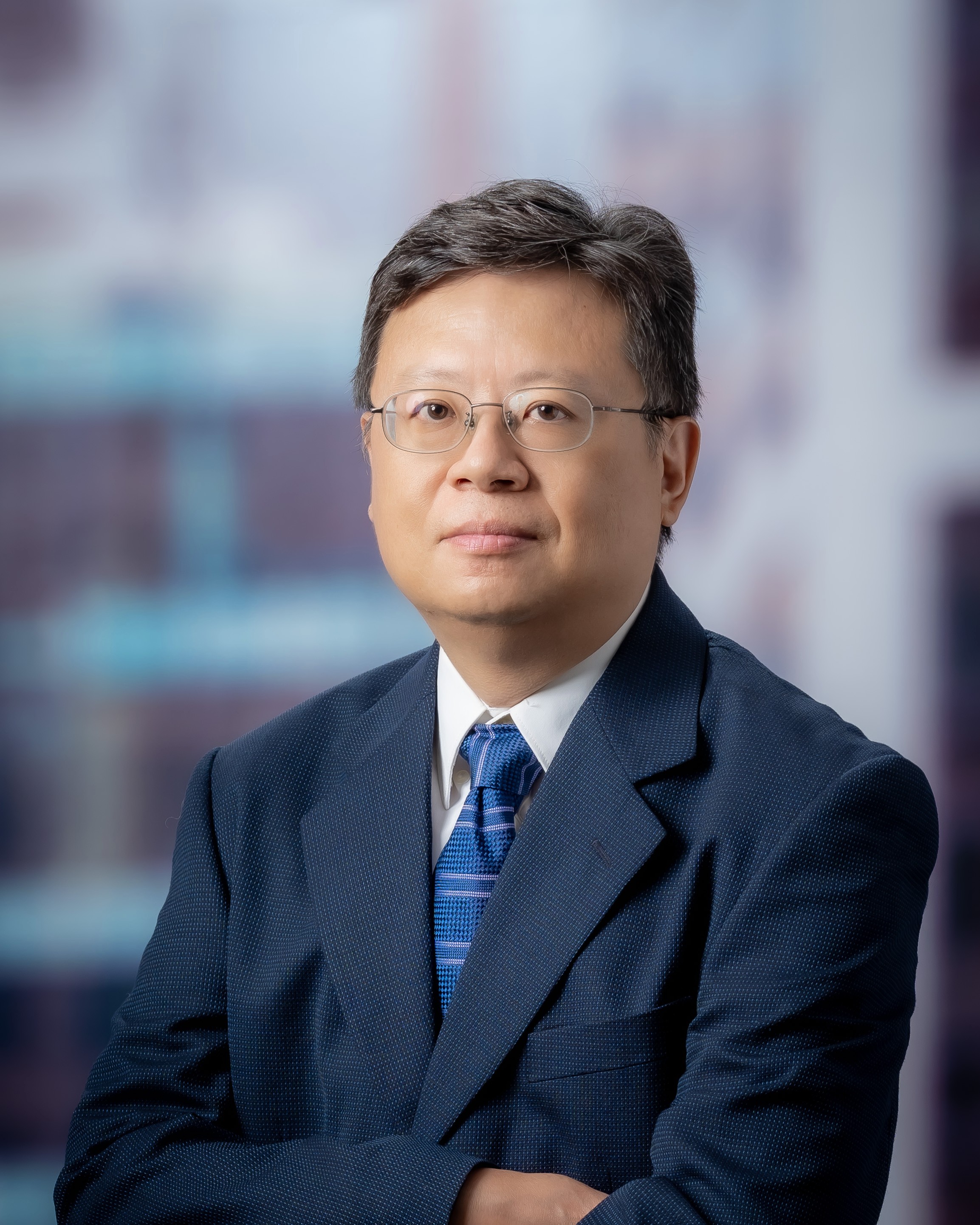 |
Prof. Ki Ling CHEUNG Prof. Ki Ling Cheung is an Associate Professor in the Department of Information Systems, Business Statistics and Operations Management, The Hong Kong University of Science and Technology. He received a B.S. degree in Mathematics from University of Wisconsin, Madison, a M.S. degree and a Ph.D. degree in Industrial Engineering, both from Stanford University. Prior to joining HKUST in 1993, he was a management consultant at Teknekron Corporation, California, U.S.A. Prof. Cheung has extensive consulting experience in US, Canada and Hong Kong. His clients include companies such as Matsushita, British Petroleum, Dofasco Steel, Algoma Steel and Esquel. He also taught executive-level supply chain management courses for HKUST. His primary research interest is in inventory management and supply chain management, and his research work appears in leading professional journals such as Management Science, Operations Research, Manufacturing and Service Operations Management, IIE Transactions, Naval Research Logistics and Supply Chain Management Review. He had been a member of the editorial board for the supply chain management department of IIE Transactions. Prof. Cheung received the HKUST "Best Ten Lecturers" award in 1996. He is also a recipient of the Franklin Prize of Teaching Excellence in the Business School. |